
More Than Graphics: What’s Actually Evolving
Gone are the days when visual fidelity alone made a game stand out. While high quality graphics remain important, the real innovation in 2026 gaming lies deeper: in how games feel, behave, and immerse players.
Beyond Pretty Pixels
Performance metrics are no longer limited to frame rates and lighting detail. Gamers in 2026 expect:
Seamless world interactions
Responsive environments that reflect player actions
Minimal load times with maximum immersion
Next gen games deliver experiences where technical power reinforces emotional connection not just visual spectacle.
Immersion Becomes the Core Focus
Immersive design now shapes every element of gameplay. Developers are rethinking every detail, from HUD design to character physics, to make it all feel more natural and engaging.
Key trends driving this shift:
Deep environmental storytelling
Organic world building that reacts to player behavior
Multi sensory inputs like spatial sound and haptic feedback
Immersion isn’t a feature it’s the foundation.
Storytelling Powered by Technology
Technology now enhances story rather than overshadowing it. The most anticipated titles of 2026 blend cinematic storytelling with cutting edge systems.
Expect to see:
AI enhanced dialogue allowing emotional player driven narratives
Real time cutscenes with no break in gameplay
Procedurally generated events that still tie into crafted story arcs
The result? A tighter bond between players and the worlds they explore.
The future of game performance isn’t defined by specs alone it’s about how all the elements work together to suspend disbelief and pull players fully into the experience.
Real Time Ray Tracing No Longer Optional
Lighting is no longer the silent background player it’s the headline act. In 2026, real time ray tracing isn’t a luxury feature anymore; it’s the standard baseline. Thanks to more efficient GPU architecture and smarter rendering pipelines, developers are dialing up lighting realism without melting your hardware. What used to tank frame rates five years ago now runs smoothly on mid tier rigs.
AAA studios are going all in. They’re using next gen acceleration tech not just to cast pretty shadows but to transform whole atmospheres. Dynamic lighting now shapes how players move, hide, and react. Environments feel alive because the light behaves like it does in real life: bouncing, diffusing, flaring. This isn’t overselling it; it’s just the reality of where the bar sits now.
By 2026, visual expectations won’t stop at 4K textures or cinematic cutscenes. They’ll demand believable light, global illumination that shifts with time, space, even the player’s choices. The tech has caught up but so have the standards. Gamers will expect this. Studios that skip it? They’ll stand out for the wrong reasons.
AI Driven NPCs and Procedural Worlds
Enemies that learn. Quests that react to your decisions. Open worlds that generate themselves as you explore. It’s not hype it’s the next stage of game design, and it’s already unfolding.
AI is finally escaping the trope of dumb bots running in circles. We’re now seeing smarter non playable characters who adapt to player behavior, shift tactics mid combat, and even build relationships over time. Games are starting to remember more than your last save file they’re tracking your choices and adjusting the world around you accordingly.
Procedural generation is going mainstream for open world games. But we’re not just talking about randomized map layouts anymore. Entire ecosystems, complex weather cycles, and evolving storylines are being built on the fly, driven by machine learning systems. Developers are no longer handcrafting every detail instead, they’re training algorithms to fill in worlds that feel alive and unpredictable.
Machine learning is also unlocking subtler, more human feeling interactions. Dialogue systems are improving. Reactions from NPCs feel less scripted, making immersion deeper than ever. The bottom line? Games are becoming less like static playgrounds and more like organic, responsive realities.
Explore more about future gaming trends
Haptic Feedback and Spatial Audio Takeover

Gaming is no longer just about what you see it’s about what you feel and hear, too. In 2026, next gen controllers are going way beyond rumble. We’re talking about pressure responsive grips, adaptive resistance triggers, and even temperature shifts. It’s not just immersion it’s feedback that matters during play. Every action feels like it has weight, consequence, and dimension.
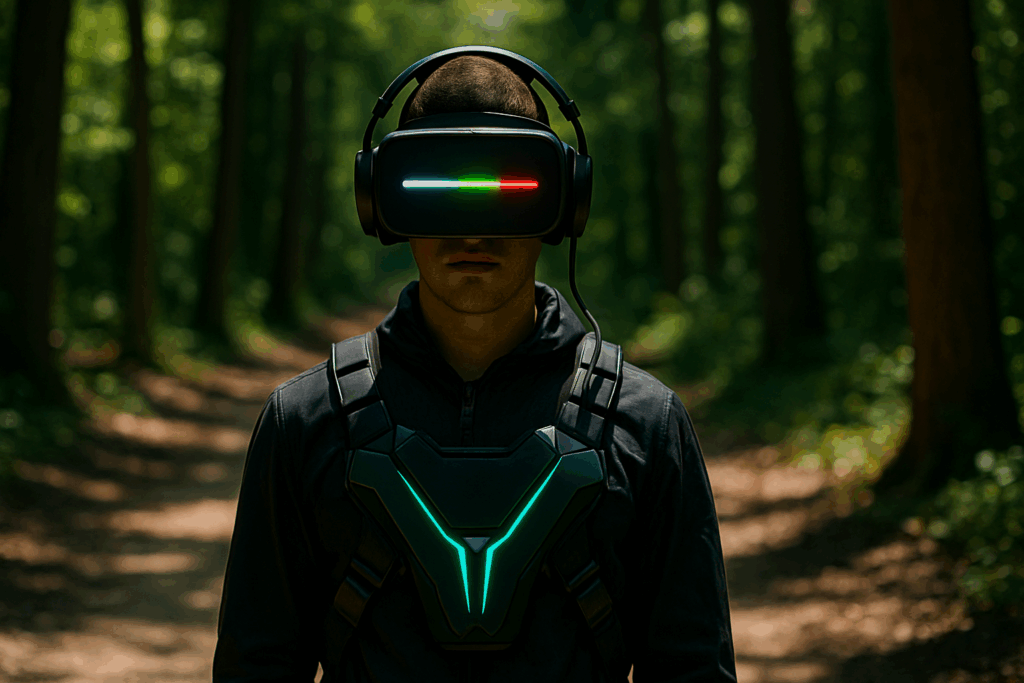
VR and AR gear is closing the gap between digital and real. Headsets now come with built in haptic bands, smarter motion tracking, and wide field of view lenses that mimic natural peripheral vision. For vloggers focused on gaming content, this means new ways to shoot immersive gameplay footage virtual hands, real reactions.
Sound isn’t an afterthought either. Audio engines built for spatial mapping are letting players hear enemies creeping up from exact angles or sense weather shifting all around them. Games aren’t just looking better they’re sounding real in a way that changes how we play.
Bottom line: in 2026, feedback is function, not fluff.
Cloud Native and Device Agnostic Gaming
The days of being tied to a specific console or maxed out rig are numbered. In 2026, game design is being built from the cloud up. Developers are now optimizing games to take advantage of high speed networks instead of assuming local processing power. That means smoother gameplay, faster loading, and fewer hardware bottlenecks.
These advances are shaping experiences across all platforms, including mobile, where even the Best Android games now deliver console-level immersion and performance.
The spread of 5G and edge computing is changing what’s possible in real time multiplayer. Low latency is no longer a wishlist item it’s table stakes. We’re seeing massive online worlds that stay responsive even during peak load. For competitive games, that means fairer play. For co op story modes, it means deeper immersion with less tech friction.
Most importantly, the platform walls are coming down. Stream a cross platform battle royale from your phone at lunch, then pick it up on your smart TV at home. No bulky gear, no save files lost in translation. The focus has shifted from where you play to how well the game performs everywhere.
This isn’t just a performance uplift it’s a shift in mindset. Developers are building for mobility first, with the assumption that your game should follow you, not the other way around.
Behind the Scenes: Game Dev Gets a Tech Boost
Game development is shedding old skin fast. Generative tools once experimental are now central. AI is helping artists whip up concept environments in half the time, generating draft levels based on player behavior, or even composing musical scores that react to in game moments. It’s not science fiction anymore; it’s baked into pipelines from day one.
Automation is also slashing through the grunt work. Bug hunting, regression testing, and build testing cycles that once dragged on for weeks are now condensed into hours. Smart scripts catch issues before QA even boots up the game. The result? Faster iterations. Clean launches. Less crunch at least in theory.
All this automation means teams can stay lean without losing output. Smaller studios are now punching way above their weight, and even major players are restructuring around tighter, tech powered crews. Productivity is climbing, but the bar for quality keeps rising too. In this new landscape, efficiency isn’t a bonus it’s survival.
What to Watch for Next
The future of gaming won’t just be driven by how good a title looks or how fast it runs. There’s a quiet but powerful shift happening under the hood one rooted in ownership, player agency, and technical freedom. Blockchain is slowly maturing beyond buzzword status, offering genuine frameworks for asset ownership, secure trading, and in some cases, decentralized game economies. Whether that’s skins, weapons, or entire modded experiences, the idea is simple: if you earn or create something in game, it should belong to you.
Modding rights once tolerated, now increasingly embraced are being redefined in the age of user generated content. Studios are beginning to understand that empowering modders isn’t a threat, it’s a growth strategy. The most forward thinking engines in development are baking in robust mod friendly architecture, with open APIs and asset marketplaces. In this landscape, the line between developer and player starts to blur.
On the visual side, realism keeps dominating but there are cracks. Highly stylized games with strong artistic voices are regaining momentum, not only for aesthetic reasons but for performance and identity. As monetization pressures grind on major studios, smaller teams are carving out spaces with bold, creative looks that sidestep the race for cinematic photorealism.
Bottom line: the next wave of influential games won’t just be built with powerful tools they’ll be shaped by who owns the assets, who alters the worlds, and how easily those changes can scale. Want to ride the wave? Watch the backend tech, not just the highlight reels.