

I’m here to give you a straight, no-fluff overview of the macromatic kfc product line. These are time delay relays used in specific commercial and industrial equipment. You need to know what they do, where they’re used, and how to troubleshoot them.
That’s exactly what I’ll cover, and no fluff, just the essentials.
You might be wondering why this matters. Well, using the right component is crucial for equipment safety and efficiency. Trust me, I get it.
You don’t have time for long-winded explanations. You want answers, and that’s what you’ll find here.
What is the Macromatic KFC and What Does It Do?
The Macromatic KFC series is a family of plug-in time delay relays designed for controlling electrical circuits in demanding environments. Think of it as a precise, automated stopwatch that tells a machine when to turn on or off after a specific event occurs.
These relays can delay the start of a motor, control a heating element’s cycle, or ensure a process happens in the correct sequence. The adjustable timing knob lets you set the delay to your exact needs.
The compact plug-in design makes it easy to replace if needed. You just pop out the old one and plug in the new one—no fuss, no mess.
High-reliability contacts mean you can trust the Macromatic KFC to work consistently, even in tough conditions.
There are different models within the KFC series, each with its own voltage and timing range. So, whether you need a 120V or 240V model, or a timing range from seconds to hours, there’s a KFC relay that fits your setup.
Common Applications: Where You’ll Find This Component
You’ll often find this component in commercial food service equipment like deep fryers, ovens, or dishwashers. It plays a crucial role in these machines.
In a commercial fryer, the KFC relay can be used to ensure the oil circulation pump runs for 30 seconds before the main heating elements are energized. This prevents scorching and extends equipment life.
But it’s not just about food service. HVAC equipment, pump control panels, packaging machinery, and car wash systems also use this relay. Why?
Because of its durability, accuracy, and ease of service.
Let’s compare it to other relays. Some might be cheaper, but they don’t offer the same level of reliability. The macromatic kfc, on the other hand, is built to last and can handle tough conditions.
That’s why it’s a go-to choice for many professionals.
It’s also a direct replacement part for specific OEM (Original Equipment Manufacturer) machinery. This means you can swap it out without any hassle, keeping your operations running smoothly.
How do you know if your equipment uses a Macromatic KFC relay? Just look for the part number on the component itself. Simple as that. macromatic kfc
Key Technical Specifications and Installation Guide
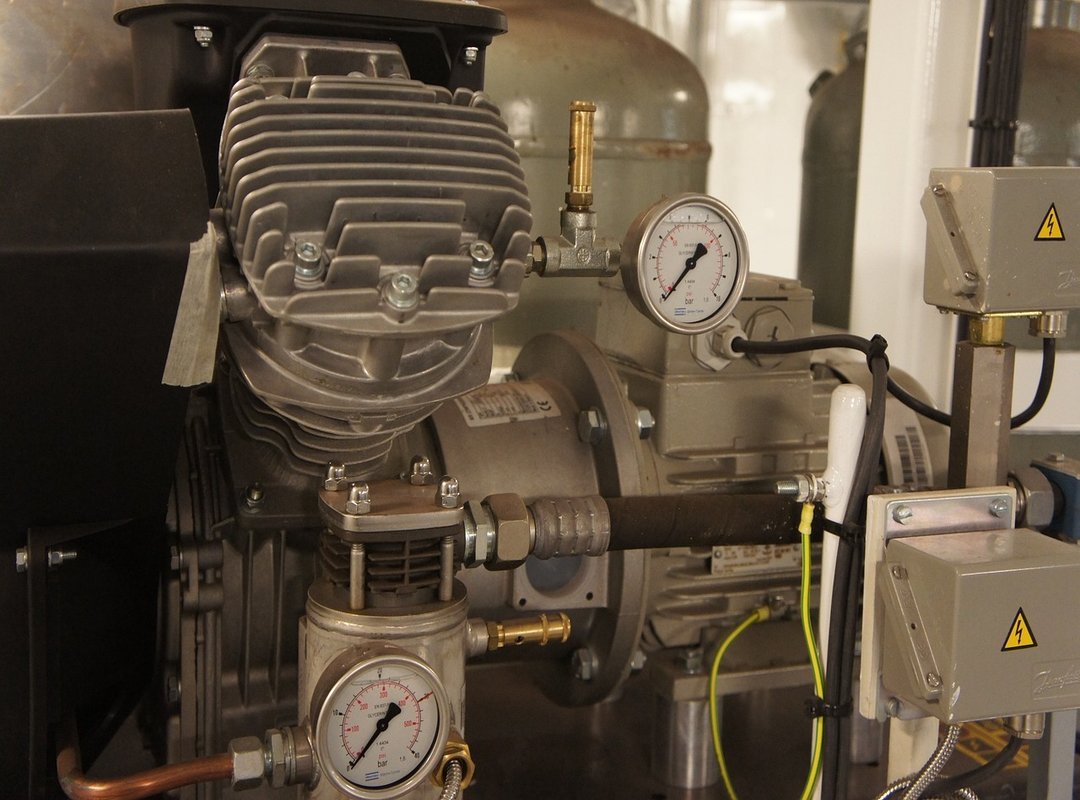
Let’s get to the nitty-gritty. Here are the most important technical specs for the macromatic kfc:
- Operating Voltages: 24V AC/DC, 120V AC
- Timing Ranges: 0.1s – 10 min
- Output Contact Rating: 10A @ 240V AC
- Base/Socket Type: 8-pin octal
Before you start, make sure to de-energize the circuit. Safety first, right?
Now, setting the time delay is pretty straightforward. Use the dial on the unit. It has different scales and multipliers, so take a moment to familiarize yourself with them.
The LED indicators on the relay are super helpful. The green LED tells you that power is applied. The red LED indicates the output relay is energized.
Simple but crucial for diagnostics.
I’ll be honest, sometimes these dials can be a bit finicky. If you’re not sure, double-check the manual or reach out to someone who’s done it before. No shame in that.
Simple Troubleshooting Steps for Common Issues
The relay does not energize or ‘click’, and frustrating, right? This can happen due to incorrect voltage, loose socket connections, or a failed internal component.
Check the voltage first; it should match the relay’s specifications.
If the timing is off, re-verify the dial setting. Fluctuations in supply voltage can mess with timing accuracy, so make sure that’s stable too.
What if the controlled equipment (the load) doesn’t turn on even when the relay clicks? Check the wiring on the output contact pins, like pins 1 and 3, or 6 and 8. Loose or damaged wires can cause this issue.
Pro tip: If basic troubleshooting fails, the component itself may need replacement. Confirm the exact part number before ordering a new one. For example, if you’re using a macromatic kfc, make sure you get the right model.
Simple steps, but they can save you a lot of headaches.
Where to Find Datasheets and Purchase a Replacement
For complete wiring diagrams and specifications, search for the Macromatic KFC datasheet on the manufacturer’s official website. This will provide you with all the necessary details to ensure compatibility.
These components are typically sold through national and local industrial electronics distributors. You can find them by visiting the distributor’s website or contacting their sales team directly.
Always double-check the part number printed on your old relay to ensure you are purchasing the exact replacement for your equipment.
 Mattieson Spearsine has opinions about player strategy guides. Informed ones, backed by real experience — but opinions nonetheless, and they doesn't try to disguise them as neutral observation. They thinks a lot of what gets written about Player Strategy Guides, Esports Coverage and Highlights, Game Reviews and Insights is either too cautious to be useful or too confident to be credible, and they's work tends to sit deliberately in the space between those two failure modes.
Reading Mattieson's pieces, you get the sense of someone who has thought about this stuff seriously and arrived at actual conclusions — not just collected a range of perspectives and declined to pick one. That can be uncomfortable when they lands on something you disagree with. It's also why the writing is worth engaging with. Mattieson isn't interested in telling people what they want to hear. They is interested in telling them what they actually thinks, with enough reasoning behind it that you can push back if you want to. That kind of intellectual honesty is rarer than it should be.
What Mattieson is best at is the moment when a familiar topic reveals something unexpected — when the conventional wisdom turns out to be slightly off, or when a small shift in framing changes everything. They finds those moments consistently, which is why they's work tends to generate real discussion rather than just passive agreement.
Mattieson Spearsine has opinions about player strategy guides. Informed ones, backed by real experience — but opinions nonetheless, and they doesn't try to disguise them as neutral observation. They thinks a lot of what gets written about Player Strategy Guides, Esports Coverage and Highlights, Game Reviews and Insights is either too cautious to be useful or too confident to be credible, and they's work tends to sit deliberately in the space between those two failure modes.
Reading Mattieson's pieces, you get the sense of someone who has thought about this stuff seriously and arrived at actual conclusions — not just collected a range of perspectives and declined to pick one. That can be uncomfortable when they lands on something you disagree with. It's also why the writing is worth engaging with. Mattieson isn't interested in telling people what they want to hear. They is interested in telling them what they actually thinks, with enough reasoning behind it that you can push back if you want to. That kind of intellectual honesty is rarer than it should be.
What Mattieson is best at is the moment when a familiar topic reveals something unexpected — when the conventional wisdom turns out to be slightly off, or when a small shift in framing changes everything. They finds those moments consistently, which is why they's work tends to generate real discussion rather than just passive agreement.