
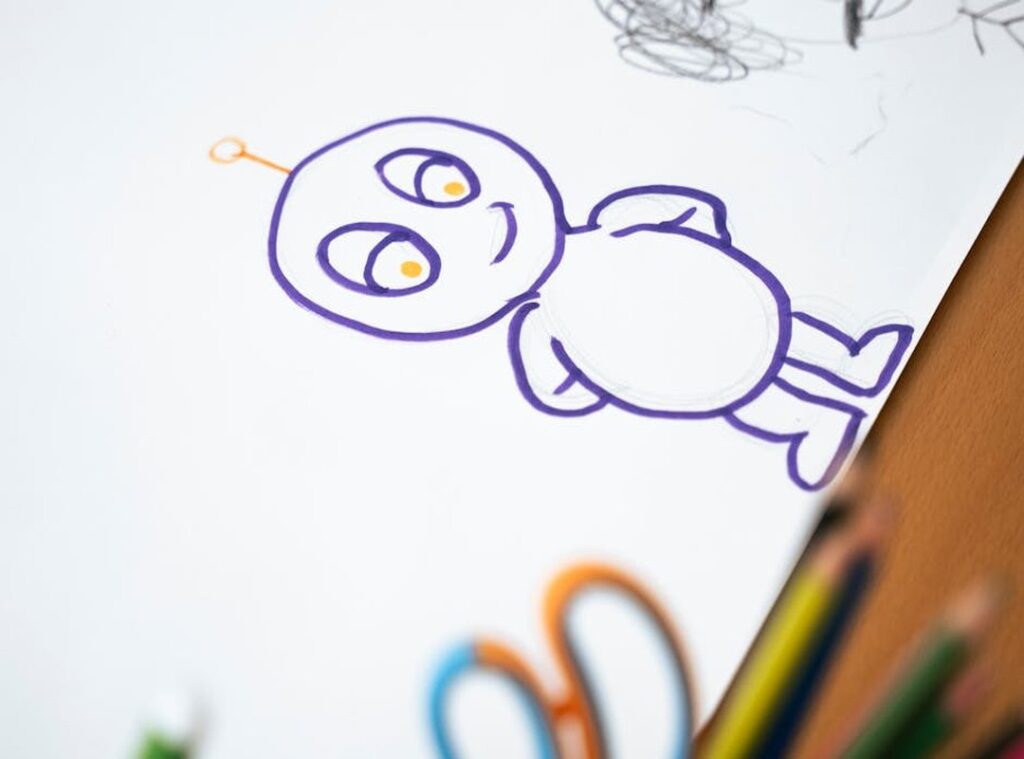
You know that feeling when you stare at a blank page, pencil in hand, and your mind goes blank? It’s frustrating. You want to create something beautiful, but the fear of messing up holds you back.
helpot piirustus mallit can be your secret weapon. They’re perfect for anyone, no matter your skill level. These templates help you bridge the gap between your imagination and what actually ends up on the paper.
This guide will give you everything you need to find, use, and learn from these templates. You’ll build genuine drawing confidence, I promise.
We’ll cover a variety of templates too—simple animals, cartoon faces, floral patterns. There’s something for everyone.
And here’s the kicker: using templates isn’t cheating. It’s a proven learning tool used by artists to master fundamentals like shape, proportion, and line work. So, let’s dive in and get those creative juices flowing!
Building Confidence, One Line at a Time
A drawing template is a pre-made outline or foundational guide used for tracing or visual reference. It’s like having a map to follow, making the whole process easier.
For beginners, templates remove the fear of making that first mark. They help build essential muscle memory for common shapes and curves. This is crucial when you’re just starting out.
Templates also demystify complex subjects by breaking them down into simple, manageable components. This makes the drawing process less overwhelming. Imagine trying to draw a detailed portrait from scratch.
It can be daunting. But with a template, it’s more like putting together a puzzle.
Successfully completing a drawing with a template provides a powerful sense of accomplishment. This encourages further practice. You feel good about what you’ve done, and that feeling keeps you coming back for more.
Using a template is like learning to play a song by following sheet music before composing your own. It gives you a guided, low-frustration experience. This is in stark contrast to the often discouraging process of trying to draw complex subjects from scratch as a novice.
In the future, I think we’ll see more advanced and interactive templates. Maybe even digital ones that can adjust based on your skill level. (That’s just speculation, but it makes sense with how technology is advancing.)
One term you might come across is “helpot piirustus mallit.” It’s Finnish for “easy drawing templates.” These are especially useful for beginners looking to build their skills without getting too frustrated.
So, if you’re new to drawing, give templates a try. They can make a big difference in building your confidence and skills.
5 Beginner-Friendly Templates to Start Drawing Today
Have you ever felt stuck, not knowing where to start with your drawing? I’ve been there. It can be overwhelming.
But here’s the good news: using templates can make a huge difference.
-
Geometric Animals
These templates feature cats, bears, or foxes built from simple circles, triangles, and squares. They teach the core skill of combining basic shapes to create a recognizable form. It’s like building blocks for art. -
Cartoon Faces & Expressions
These are great for learning facial proportions. Minor adjustments to eyes and mouths can convey a wide range of emotions. Perfect for adding personality to your drawings. -
Simple Botanicals (Flowers & Leaves)
Tracing these organic shapes helps develop skills in creating smooth, flowing lines and graceful curves. It’s all about getting that natural, organic feel. -
Everyday Objects
Templates of items like coffee mugs, books, or apples train the eye to see the fundamental shapes that make up the world around us. It’s a practical way to improve your observational skills. -
Basic Lettering & Bubble Fonts
This is a fun, practical way to practice line control, spacing, and consistency. You can use it in journals, notes, or cards. It’s both useful and creative.
Using helpot piirustus mallit can make your journey into drawing a lot easier. So, which one will you try first?
From Tracing to Freehand: A Step-by-Step Guide
Let’s get real. Moving from using templates to drawing independently can feel like a big leap. But it doesn’t have to be.
Here’s how you can make the transition smoothly.
First, start with the direct trace. Grab your template and trace it 2-3 times. This helps you internalize the feel and flow of the lines.
Simple, right?
Next, try the side-by-side reference. Place the template next to your paper and replicate it by eye. Focus on matching the overall shape and proportions.
It’s like training your hand and brain to work together.
Now, let’s break it down. Look at the template and deconstruct it into basic shapes. For example, the head might be a large oval, and the ears could be triangles.
Draw these shapes on your own paper. This step is crucial for building your spatial awareness.
Finally, add your own flair. Use the template as a base but then add your own details or variations. This is where you start to create original art.
It’s a gradual process, and each step builds a different but equally important artistic skill.
Remember, practice makes perfect. Don’t rush. Take your time with each step.
And if you need some inspiration, check out the new games coming soon. They might spark some creative ideas.
Oh, and one more thing. If you’re looking for some great templates, helpot piirustus mallit can be a fantastic resource. Give them a try and see how they fit into your practice.
Your Go-To List for Free, Printable Drawing Templates
Finding the right drawing templates can make all the difference. Here’s a list of reliable online resources to get you started.
Pinterest is a goldmine. Use specific search terms like ‘easy drawing outline,’ ‘beginner line art,’ or ‘simple animal template’ to find endless options. It’s a great way to discover new ideas and get inspired.
Supercoloring.com is another fantastic site. It has a massive library of coloring pages that serve as perfect, clean-lined templates for tracing and practice. You’ll find everything from animals to intricate patterns.
Canva is more than just a design tool. Users can search the ‘Elements’ tab for free ‘line art’ or ‘doodles.’ These can be easily printed or used as digital guides. It’s versatile and user-friendly.
Art for Kids Hub is a fun resource. It offers character-based templates that are broken down into simple steps. Perfect for beginners and kids alike.
Pro tip: Always look for templates with bold, clear lines and minimal shading. They are easiest for beginners to follow.
And if you’re looking for something in Finnish, try searching for “helpot piirustus mallit.” You might find some great local resources too.
Your Artistic Journey Starts Now
helpot piirustus mallit are an accessible, effective, and fun tool for overcoming the initial hurdles of learning to draw. They help you build the skills and confidence needed for future creativity, not as a crutch, but as a launchpad. Start by tracing and gradually move towards creating your own unique artwork.
Challenge yourself to choose one resource from the list, find a template that excites you, and spend the next 10 minutes drawing. The only thing separating you from being someone who draws is starting. So start now.
 Juanita Ecklesize is the kind of writer who genuinely cannot publish something without checking it twice. Maybe three times. They came to expert analysis through years of hands-on work rather than theory, which means the things they writes about — Expert Analysis, Upcoming Game Releases, Game Reviews and Insights, among other areas — are things they has actually tested, questioned, and revised opinions on more than once.
That shows in the work. Juanita's pieces tend to go a level deeper than most. Not in a way that becomes unreadable, but in a way that makes you realize you'd been missing something important. They has a habit of finding the detail that everybody else glosses over and making it the center of the story — which sounds simple, but takes a rare combination of curiosity and patience to pull off consistently. The writing never feels rushed. It feels like someone who sat with the subject long enough to actually understand it.
Outside of specific topics, what Juanita cares about most is whether the reader walks away with something useful. Not impressed. Not entertained. Useful. That's a harder bar to clear than it sounds, and they clears it more often than not — which is why readers tend to remember Juanita's articles long after they've forgotten the headline.
Juanita Ecklesize is the kind of writer who genuinely cannot publish something without checking it twice. Maybe three times. They came to expert analysis through years of hands-on work rather than theory, which means the things they writes about — Expert Analysis, Upcoming Game Releases, Game Reviews and Insights, among other areas — are things they has actually tested, questioned, and revised opinions on more than once.
That shows in the work. Juanita's pieces tend to go a level deeper than most. Not in a way that becomes unreadable, but in a way that makes you realize you'd been missing something important. They has a habit of finding the detail that everybody else glosses over and making it the center of the story — which sounds simple, but takes a rare combination of curiosity and patience to pull off consistently. The writing never feels rushed. It feels like someone who sat with the subject long enough to actually understand it.
Outside of specific topics, what Juanita cares about most is whether the reader walks away with something useful. Not impressed. Not entertained. Useful. That's a harder bar to clear than it sounds, and they clears it more often than not — which is why readers tend to remember Juanita's articles long after they've forgotten the headline.