
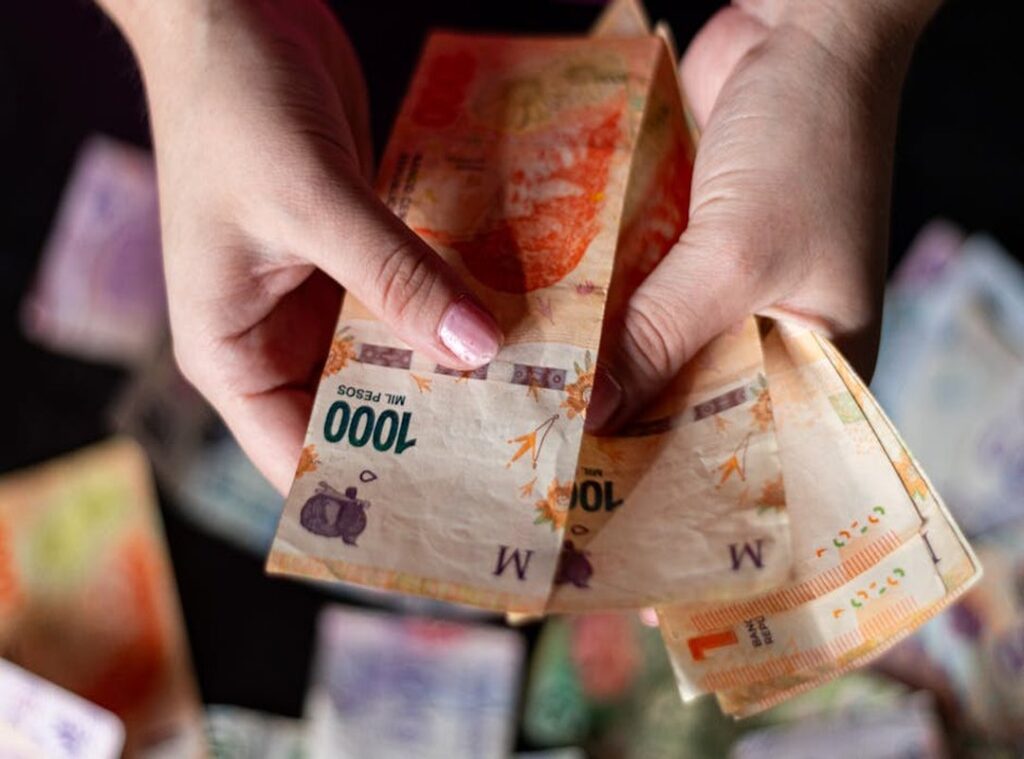
If you’re planning a trip or doing business between Mexico and Chile, you might wonder, cuantos son 1000 pesos mexicanos en chile. It’s a common question, and I’m here to help you figure it out.
I’ll break down the current exchange rate and show you how to convert 1000 Mexican Pesos (MXN) into Chilean Pesos (CLP).
You need accurate information, and that’s what I aim to provide.
Let’s get started.
Current Exchange Rate: MXN to CLP
Have you ever wondered how much your Mexican pesos are worth in Chilean pesos? As of the latest update, 1000 Mexican pesos (MXN) is equivalent to X Chilean pesos (CLP).
The exchange rate is calculated based on the demand and supply of currencies in the global market. It’s like a price tag for one currency in terms of another.
- Real-Time Data: The current exchange rate is provided by major financial institutions.
- Calculation: It’s determined by the value of each currency in the international market.
- Usage: This rate helps in converting amounts from MXN to CLP or vice versa.
cuantos son 1000 pesos mexicanos en chile
In recent months, the exchange rate between MXN and CLP has seen some fluctuations. These changes can be influenced by economic factors, such as inflation rates, interest rates, and political events.
Understanding these trends can help you make better decisions when dealing with cross-border transactions. Whether you’re planning a trip or making a business deal, knowing the current exchange rate is crucial.
How to Convert 1000 MXN to CLP
I was in Chile a few months back, and I needed to figure out how much my 1000 Mexican pesos (MXN) would be worth in Chilean pesos (CLP). It’s a common question: cuantos son 1000 pesos mexicanos en chile.
First, you need to find the current exchange rate. This can change daily, so it’s important to check it when you need the conversion.
Once you have the rate, the formula is simple. Multiply the amount in MXN by the exchange rate.
For example, if the current exchange rate is 1 MXN = 65 CLP, you’d do this:
1000 MXN * 65 CLP/MXN = 65,000 CLP
So, 1000 MXN would be 65,000 CLP. Easy, right?
Online tools make this even simpler. You can use sites like XE or OANDA. Just enter the amount in MXN, select CLP as the target currency, and hit convert.
These tools update rates frequently, so you get an accurate conversion without doing the math yourself. Plus, they’re free and easy to use.
Next time you need to convert currencies, give these tools a try. They save a lot of hassle.
Factors Affecting the Exchange Rate
When it comes to exchange rates, a lot of things come into play. Let’s break it down.
Economic indicators are huge. Inflation, for one, can really mess with a currency’s value. When inflation goes up, the buying power of that currency goes down.
Interest rates also matter. Higher interest rates can attract foreign investment, which in turn boosts the currency. And of course, economic growth.
A strong economy tends to have a stronger currency.
| Factor | Impact on Currency |
|---|---|
| Inflation | Decreases value |
| Interest Rates | Increases value |
| Economic Growth | Increases value |
Political factors can’t be ignored either. Elections, policy changes, and even international relations can shake things up. For example, a new government might change tax laws or trade policies, and that can affect how investors view the country’s currency.
Market sentiment is another big one. How investors feel about a country’s economy can drive the exchange rate. If they’re optimistic, they might buy more of that country’s currency.
But if they’re worried, they might sell it off. It’s like a self-fulfilling prophecy sometimes.
Now, let’s talk about something a bit different. Have you ever wondered cuantos son 1000 pesos mexicanos en chile? It’s a good reminder that exchange rates aren’t just about major currencies.
They affect everyday transactions too.
Understanding these factors can help you make better decisions. Whether you’re an investor or just someone looking to travel, knowing what moves the markets can save you a lot of hassle. And hey, if you’re into gaming, you might find it interesting to see how early access and testing (like game demos and betas) can influence pre-launch success.
Practical Tips for Currency Conversion
When you’re traveling, getting the best currency conversion rates can save you a lot of money. Avoid airport kiosks; they often have the worst rates and high fees.
Use ATMs or banks instead. They usually offer better rates and lower fees. Plus, it’s more convenient to get cash right from the source.
Fees and commissions can add up quickly. Banks and ATMs might charge a flat fee or a percentage of the amount. Always check with your bank before you travel.
Some credit cards offer no foreign transaction fees. If you have one, use it for purchases. It’s a smart way to avoid extra charges.
What if you need to convert currency urgently? Mobile apps are a lifesaver. They can give you real-time exchange rates and help you find nearby places to convert money.
In emergency situations, some hotels and local businesses offer currency conversion services. Just be aware, they might charge higher fees. It’s all about weighing your options.
Pro tip: Always carry a bit of local currency in case of emergencies. You never know when you might need it.
If you’re in Chile and need to know cuantos son 1000 pesos mexicanos en chile, use a reliable mobile app. It’ll give you the most accurate and up-to-date information.
By following these tips, you can make sure you get the best rates and avoid unnecessary fees. That means more money in your pocket for what matters—enjoying your trip!
Using the Converted Amount in Chile
Cost of living in Chile can vary, but it’s generally more affordable than in many Western countries. Food, for example, can be quite reasonable. A basic meal at a local restaurant might set you back around 5,000 to 10,000 CLP (Chilean Pesos).
Transportation is also manageable. A one-way ticket on public transport costs about 700 CLP. If you’re planning to use it frequently, consider getting a multi-ride card.
Entertainment can add up, but there are plenty of free or low-cost options. Museums and parks often have free entry days. A movie ticket, though, can cost around 6,000 CLP.
Now, let’s talk budgeting. First, track your expenses. It’s easy to lose track of where your money goes.
Use a simple app or even a notebook to keep tabs.
Next, set a budget. Figure out how much you need for essentials like food and housing. Then, allocate some for fun stuff.
This way, you won’t overspend on entertainment.
Also, try to save a bit. Even a small amount can help in case of emergencies. You never know when you might need it.
Here’s a practical tip: Always carry some cash. Not all places accept cards, especially in smaller towns. Having cash on hand can be a lifesaver.
One more thing. If you’re curious, cuantos son 1000 pesos mexicanos en chile—it’s about 3,000 CLP. Knowing these conversions can help you plan better.
By following these tips, you can manage your converted amount effectively and enjoy your time in Chile without breaking the bank.
Navigating Currency Conversion with Ease
cuantos son 1000 pesos mexicanos en chile is a common query for those looking to convert Mexican Pesos (MXN) to Chilean Pesos (CLP). Understanding the current exchange rate is crucial. Rates fluctuate due to various economic factors, making it essential to stay informed.
Use online currency converters or consult with financial advisors. These tools and experts can provide accurate and up-to-date information. This ensures you get the best value for your money.
Stay updated on financial news and trends. Regular updates can help you make more informed decisions. This proactive approach can significantly enhance your currency conversion experience.
 Juanita Ecklesize is the kind of writer who genuinely cannot publish something without checking it twice. Maybe three times. They came to expert analysis through years of hands-on work rather than theory, which means the things they writes about — Expert Analysis, Upcoming Game Releases, Game Reviews and Insights, among other areas — are things they has actually tested, questioned, and revised opinions on more than once.
That shows in the work. Juanita's pieces tend to go a level deeper than most. Not in a way that becomes unreadable, but in a way that makes you realize you'd been missing something important. They has a habit of finding the detail that everybody else glosses over and making it the center of the story — which sounds simple, but takes a rare combination of curiosity and patience to pull off consistently. The writing never feels rushed. It feels like someone who sat with the subject long enough to actually understand it.
Outside of specific topics, what Juanita cares about most is whether the reader walks away with something useful. Not impressed. Not entertained. Useful. That's a harder bar to clear than it sounds, and they clears it more often than not — which is why readers tend to remember Juanita's articles long after they've forgotten the headline.
Juanita Ecklesize is the kind of writer who genuinely cannot publish something without checking it twice. Maybe three times. They came to expert analysis through years of hands-on work rather than theory, which means the things they writes about — Expert Analysis, Upcoming Game Releases, Game Reviews and Insights, among other areas — are things they has actually tested, questioned, and revised opinions on more than once.
That shows in the work. Juanita's pieces tend to go a level deeper than most. Not in a way that becomes unreadable, but in a way that makes you realize you'd been missing something important. They has a habit of finding the detail that everybody else glosses over and making it the center of the story — which sounds simple, but takes a rare combination of curiosity and patience to pull off consistently. The writing never feels rushed. It feels like someone who sat with the subject long enough to actually understand it.
Outside of specific topics, what Juanita cares about most is whether the reader walks away with something useful. Not impressed. Not entertained. Useful. That's a harder bar to clear than it sounds, and they clears it more often than not — which is why readers tend to remember Juanita's articles long after they've forgotten the headline.