I’ve been analyzing gaming hardware long enough to know when the industry is about to shift gears.
You’re here because you want straight answers about what’s coming next. Not rumors. Not wishlist speculation. Real information about the PS5 Pro, the next Xbox, the Nintendo Switch successor, and the tech that’s going to change how we play.
The problem is simple: every gaming site is running the same recycled rumors and calling it news.
Here’s what I’m doing differently. I’m cutting through the hype and showing you what’s actually confirmed, what’s likely based on solid evidence, and what’s just noise. I’ve spent years tracking hardware cycles and talking to people who know what’s happening behind closed doors.
This article gives you the real picture of gaming’s next generation.
You’ll learn which consoles are coming, what tech is powering them, and what it all means for your gaming setup. No fluff about revolutionary experiences or game-changing innovations.
Just the facts about what’s next and whether it’s worth your money.
The Mid-Generation Power-Up: PlayStation 5 Pro and the New Xbox
You know what’s wild?
We’re barely three years into this console generation and everyone’s already talking about upgrades.
Remember when a console lasted seven years without anyone asking for a Pro version? Yeah, me too. (I also remember when games came on cartridges, so maybe I’m just old.)
But here’s the deal. Mid-gen refreshes aren’t going anywhere. Your neighbor just bought a fancy 4K TV and now their PS5 games look kind of blurry. Sony knows this. Microsoft knows this too.
Some people argue these Pro consoles are just cash grabs. Why should you buy the same system twice? Just wait for the PS6, right?
Fair point. But you’re missing something.
These machines aren’t meant to replace what you already own. They’re for the players who want every frame, every ray-traced reflection, every pixel pushed to the limit. The rest of us can keep playing on our base consoles just fine.
What Makes a Pro Console Actually Pro
The philosophy is pretty simple. Give hardcore players more power without splitting the player base.
Your PS5 games will still work on PS5 Pro. Your friend with the base model can still play with you. Nobody gets left behind.
The targets for these refreshes usually include:
- Better ray tracing that doesn’t tank your frame rate
- Actual 4K at 60fps (not that upscaled stuff)
- AI tricks to make everything look sharper
PS5 Pro: The Leaks Are Getting Serious
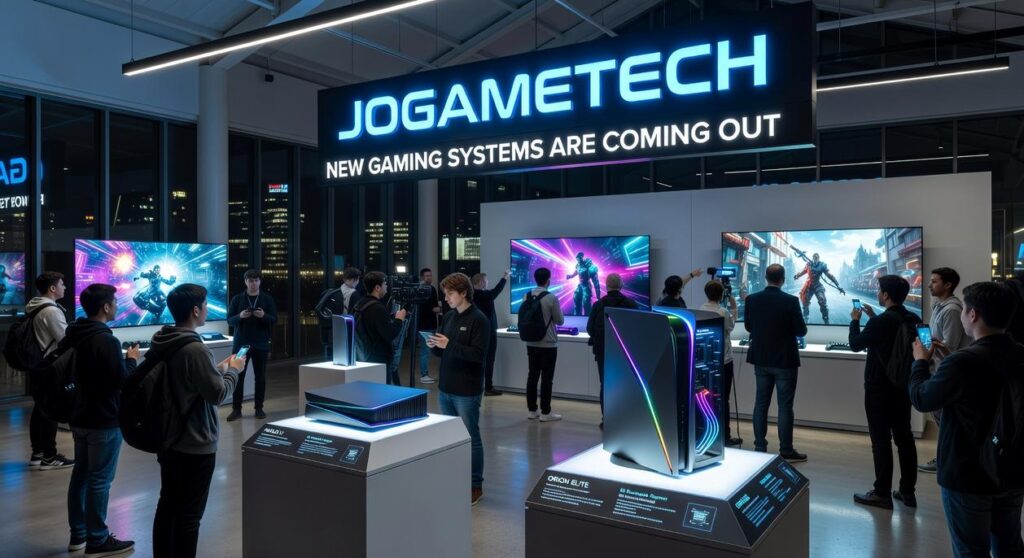
I’ve been tracking what new gaming systems are coming out jogametech and the PS5 Pro rumors are getting too specific to ignore.
Word on the street? Sony’s cooking up something with serious ray tracing upgrades. We’re talking about lighting that actually looks like real life without your console sounding like a jet engine.
The frame rate situation should get better too. Right now you pick between pretty graphics or smooth gameplay. The Pro might let you have both.
Then there’s Sony’s AI upscaling tech. They’re calling it something proprietary (because of course they are). Think DLSS but PlayStation flavored.
Xbox’s Strategy: Why Pick One When You Can Have Two
Microsoft’s doing something different. Shocking, I know.
They might release a beefier flagship console. But they’re also flirting with a digital-only box or even a handheld device. Because apparently Xbox wants to be everything to everyone.
Here’s what matters though. Game Pass is the real product. The hardware is just the delivery method.
You could play on a console, a PC, your phone, or a smart fridge for all Microsoft cares. As long as you’re subscribed, they’re happy.
What This Means for Your Wallet and Your Games
Game developers are probably sweating right now.
Do they build games that take advantage of Pro hardware? Do they ignore it and keep things simple? What about players who can’t afford to upgrade?
I don’t think we’ll see Pro-only games. That would be suicide for sales. But Pro-enhanced features? Absolutely. Better textures, higher resolutions, smoother performance.
Game prices probably won’t change. (They’re already $70, where else can they go?)
Development cycles might get trickier though. Testing games across multiple console variants takes time and money. Smaller studios might struggle with that.
The good news? You don’t have to upgrade if you don’t want to. Your base console will keep working just fine for years.
But if you’re the type who needs the absolute best? Start saving now.
Nintendo’s Next Move: Deconstructing the ‘Switch 2’
Let’s be honest about something.
Nintendo doesn’t win by having the fastest processor or the prettiest graphics. They never have.
The PS5 and Xbox Series X blow the current Switch out of the water on specs. But Nintendo sold over 140 million units anyway.
Why?
Because they understand something their competitors keep forgetting. Players don’t buy consoles for teraflops. They buy them for experiences.
Now, some people will tell you the next Switch needs to match Sony and Microsoft on raw power. That Nintendo’s falling behind and needs to catch up or die. While some argue that the next Switch must harness the raw power to compete with Sony and Microsoft, others believe that by embracing innovative ideas from platforms like Jogametech, Nintendo can redefine gaming without simply mirroring its rivals. While some argue that the next Switch must harness the raw power to compete with Sony and Microsoft, others believe that by embracing innovative designs and leveraging platforms like Jogametech, Nintendo can carve out a unique niche that emphasizes creativity and gameplay over sheer technical specifications.
I disagree.
The Real Innovation Play
What matters isn’t whether the Switch 2 (or whatever they call it) can push 4K at 120fps. What matters is the hook.
The original Switch let you play Breath of the Wild on your TV, then take it on the bus. That was the gimmick. And it worked because it solved a real problem.
So what’s next?
I think we’re looking at something that builds on portability but adds a new layer. Maybe seamless cloud integration that actually works. Maybe AR features that don’t feel tacked on.
The tech upgrades will come. But they’ll serve the concept, not define it.
Where the Hardware Actually Matters
Here’s where things get interesting.
NVIDIA’s been working with Nintendo since the original Switch launched in 2017. The partnership makes sense for both sides. Nintendo gets custom chips. NVIDIA gets a massive install base for their mobile architecture.
The rumored specs point to DLSS support. If you’re not familiar, DLSS uses AI to upscale lower-resolution images to look sharper. It’s how a handheld device can display games that look like they’re running on much stronger hardware.
Think about that for a second. You could play new video games jogametech that look genuinely impressive on a screen you’re holding in your hands.
The screen itself is probably getting an upgrade too. OLED made sense for the mid-generation refresh, but I’m hearing whispers about higher resolution panels. Maybe 1080p for handheld mode instead of 720p.
Battery life is the tradeoff nobody talks about. Better screen and more powerful chip means more power draw. Nintendo will have to balance performance with how long you can actually play before plugging in.
The Backward Compatibility Puzzle
This is where Nintendo could make or break the launch.
Should the new console play original Switch games?
The obvious answer is yes. You keep your existing player base happy and give them a reason to upgrade without losing their library.
But it’s not that simple.
The original Switch uses cartridges. If the new system moves to a different format (or goes all-digital), you’ve got a problem. Do you include a cartridge slot just for legacy support? That adds cost and takes up space.
Then there’s the business angle. Nintendo makes money selling games. If everyone just plays their old copies of Mario Kart 8, that’s revenue left on the table.
My guess? They’ll support backward compatibility but push hard on upgraded versions of popular titles. You can play your old games, but the new versions will look and run better. (It’s what they did with the Game Boy line for years.)
When Can You Actually Buy One?
Supply chain reports suggest a late 2025 window. Maybe holiday season if everything goes right.
But here’s what you’re really wondering. What games will be there at launch?
A new 3D Mario is almost guaranteed. Nintendo’s launched every major console with a Mario game since the N64. It’s their safest bet.
Metroid Prime 4 has been in development hell for years. Moving it to the new hardware as a launch title would make sense. Show off what the system can do with a game that benefits from better performance.
I’d also expect at least one surprise. Nintendo loves holding back an announcement until the last minute.
What This Means for You
So you’re probably asking yourself what happens next.
Do you buy the new console at launch? Wait for a price drop? Stick with your current Switch?
That depends on what Nintendo shows us. If the concept is strong and the launch lineup delivers, early adoption makes sense. If it’s just a spec bump with no compelling reason to upgrade, you can wait.
What about your current game library? Start thinking about which titles you’d want to replay with better performance. That’ll help you decide if backward compatibility matters to you personally.
And if you’re a collector, the original Switch might be worth holding onto. First-generation Nintendo hardware tends to appreciate over time. If this resonates with you, I dig deeper into it in Jogametech Latest Gaming Updates by Javaobjects.
The next few months will tell us everything we need to know. Until then, keep an eye on what developers are saying. They usually leak details before Nintendo’s ready to talk.
The Future is Here: Cloud, AI, and VR/AR in Gaming
Remember when everyone said Stadia’s failure meant cloud gaming was dead?
Yeah, that didn’t age well.
I’ve been testing Xbox Cloud Gaming and GeForce NOW for months now. The difference between 2021 and today is night and day. Latency used to be the dealbreaker. You’d press a button and wait just long enough to mess up your timing. As I delved into the latest advancements in cloud gaming, it became clear that the improved latency in services like Xbox Cloud Gaming and GeForce NOW has transformed my experience with new video games Jogametech, making once-frustrating delays a relic of the past.New Video Games Jogametech As I explored the seamless integration of cloud gaming technology, it became clear that the future of interactive entertainment, especially with the emergence of New Video Games Jogametech, promises a level of responsiveness and immersion that was once unimaginable.
Not anymore.
Here’s what actually works right now:
- Xbox Cloud Gaming runs smooth on decent internet (50 Mbps or higher). I played Starfield on my phone during lunch breaks without issues.
- GeForce NOW gives you the best visual quality if you have the bandwidth. Their 4K tier is legit.
- Both let you jump between devices mid-session. Started a game on my TV and finished it on my laptop.
The play anywhere promise? It’s real now.
But let’s talk about AI because this is where things get interesting.
Generative AI isn’t just a buzzword in gaming anymore. Developers are using it to build NPCs that actually remember your conversations. Not scripted responses. Real memory.
I saw a demo where an NPC recalled something I told them three hours earlier and brought it up naturally. That’s never happened in gaming before.
What AI means for you as a player:
- Worlds that generate differently each playthrough. Not just random layouts but actual unique content.
- Difficulty that adjusts to how you play. If you’re struggling with combat but crushing puzzles, the game notices.
- Side quests that feel handcrafted even though they’re procedurally made.
Some developers worry this removes the human touch. I get that concern. But I’ve played both and honestly? When it’s done right, you can’t tell the difference.
Now for VR and AR.
PSVR2 launched. Quest 3 came out. And people still ask me if VR is finally ready for everyone.
The short answer is no. Not yet.
The long answer is more complicated. The tech is there. Quest 3 is wireless and the visuals are sharp. PSVR2 has incredible games if you own a PS5. But the barrier to entry is still high.
Here’s what’s holding VR back:
- Cost (Quest 3 starts at $500, PSVR2 is $550 plus you need the console)
- Comfort (wearing a headset for more than an hour gets uncomfortable)
- Space requirements (you need room to move around safely)
But when you’re in a great VR game? Nothing else compares. I spent two hours in Resident Evil Village VR and my heart rate didn’t drop below 100. You can’t get that level of immersion on a flat screen.
The upcoming standalone headsets look promising. Companies are working on lighter designs with better weight distribution. Some are targeting the $300 range which changes the math completely.
So what should you actually invest in right now?
Cloud gaming is ready. If you have good internet and want to play without buying a console or expensive PC, go for it. Xbox Game Pass Ultimate includes cloud gaming and it’s worth the $17 a month.
AI-powered games are just starting to hit. Keep an eye on what new gaming systems are coming out Jogametech because the next wave of releases will show us what this tech can really do.
VR? Wait unless you’re already sold on it. The tech works but it’s still early adopter territory. Give it another year or two for prices to drop and comfort to improve.
AR is even further out. Cool demos exist but nothing you can actually buy and use daily for gaming.
I’m not saying avoid VR entirely. If you have the budget and the space, PSVR2 or Quest 3 will blow your mind. Just know you’re paying a premium to be early.
The real shift happens when standalone headsets hit that $300 mark with all-day comfort. We’re close but not there yet.
Esports and Competitive Play: How New Tech Will Shape the Arena
The competitive gaming scene is about to change in ways most people aren’t talking about yet.
I’m not just talking about better graphics or faster load times. Those matter, but they’re not what will reshape esports.
What matters is how new tech affects reaction time, accessibility, and the types of competitions we’ll see.
The refresh rate wars are real.
When you’re playing at 240Hz or higher, you’re seeing frames your opponent on a 60Hz display will never catch. In a fighting game, that’s the difference between blocking a combo and eating it. In an FPS, it’s whether you spot movement first or get picked off.
The new consoles coming out are pushing these numbers higher. Some people say it doesn’t matter because human reaction time has limits anyway. But ask any pro player and they’ll tell you otherwise. When everyone’s operating at the top level, milliseconds decide matches.
Here’s what that means for you. If you’re serious about competing, you need to know what new gaming systems are coming out jogametech and what specs they’re bringing to the table.
Then there’s the accessibility question.
Cloud gaming could be the great equalizer. Right now, if you want to compete seriously, you need to drop serious money on hardware. Not everyone can do that.
But if cloud services can deliver low enough latency? Suddenly a kid with a basic laptop can practice against the same competition as someone with a $3000 rig.
Some competitive purists hate this idea. They argue that investing in equipment is part of the commitment. That lowering the barrier cheapens the competition.
I see it differently. More players means deeper talent pools. It means finding the best players, not just the ones who could afford the best gear.
VR esports are coming whether we’re ready or not.
This isn’t about strapping on a headset to play the same games differently. VR competitions will require completely different skills. Physical stamina becomes a factor in ways it never was before.
I’ve watched early VR tournaments. Players are exhausted after matches in ways you don’t see in traditional esports. You’re moving your whole body, tracking threats in 360 degrees, managing motion in three dimensions. In the exhilarating world of VR tournaments, where players experience a level of physical exhaustion and immersive strategy unseen in traditional esports, the latest innovations such as Jogametech Gaming New From Javaobjects are set to redefine how we engage with competitive gaming. In the exhilarating world of VR tournaments, where players experience a level of physical and mental engagement previously unseen in traditional esports, the introduction of innovations like Jogametech Gaming New From Javaobjects promises to redefine how we approach competitive gaming.
That’s a new type of athlete entirely.
Gearing Up for the Next Generation of Play
You came here to understand what’s next in gaming hardware.
Now you know what Sony, Microsoft, and Nintendo are bringing to the table. You’ve seen the tech that will power these machines.
This next era isn’t just about sharper visuals. It’s about games that feel smarter and more immersive. It’s about experiences that reach more players than ever before.
The new gaming systems coming out jogametech will change how we play. But only if you’re ready for them.
Here’s what you should do: Use this information to plan your next purchase. Don’t wait until launch day to figure out which console fits your needs.
Check out our detailed reviews and player guides. We break down the specs and show you what actually matters when you’re holding a controller.
The next evolution of gaming is almost here. Your move is to stay informed and be ready when it arrives. Jogametech Gaming New From Javaobjects.
 There is a specific skill involved in explaining something clearly — one that is completely separate from actually knowing the subject. Ozirian Drovayne has both. They has spent years working with esports coverage and highlights in a hands-on capacity, and an equal amount of time figuring out how to translate that experience into writing that people with different backgrounds can actually absorb and use.
Ozirian tends to approach complex subjects — Esports Coverage and Highlights, Player Strategy Guides, Upcoming Game Releases being good examples — by starting with what the reader already knows, then building outward from there rather than dropping them in the deep end. It sounds like a small thing. In practice it makes a significant difference in whether someone finishes the article or abandons it halfway through. They is also good at knowing when to stop — a surprisingly underrated skill. Some writers bury useful information under so many caveats and qualifications that the point disappears. Ozirian knows where the point is and gets there without too many detours.
The practical effect of all this is that people who read Ozirian's work tend to come away actually capable of doing something with it. Not just vaguely informed — actually capable. For a writer working in esports coverage and highlights, that is probably the best possible outcome, and it's the standard Ozirian holds they's own work to.
There is a specific skill involved in explaining something clearly — one that is completely separate from actually knowing the subject. Ozirian Drovayne has both. They has spent years working with esports coverage and highlights in a hands-on capacity, and an equal amount of time figuring out how to translate that experience into writing that people with different backgrounds can actually absorb and use.
Ozirian tends to approach complex subjects — Esports Coverage and Highlights, Player Strategy Guides, Upcoming Game Releases being good examples — by starting with what the reader already knows, then building outward from there rather than dropping them in the deep end. It sounds like a small thing. In practice it makes a significant difference in whether someone finishes the article or abandons it halfway through. They is also good at knowing when to stop — a surprisingly underrated skill. Some writers bury useful information under so many caveats and qualifications that the point disappears. Ozirian knows where the point is and gets there without too many detours.
The practical effect of all this is that people who read Ozirian's work tend to come away actually capable of doing something with it. Not just vaguely informed — actually capable. For a writer working in esports coverage and highlights, that is probably the best possible outcome, and it's the standard Ozirian holds they's own work to.